Çocuk Oyun Parkları
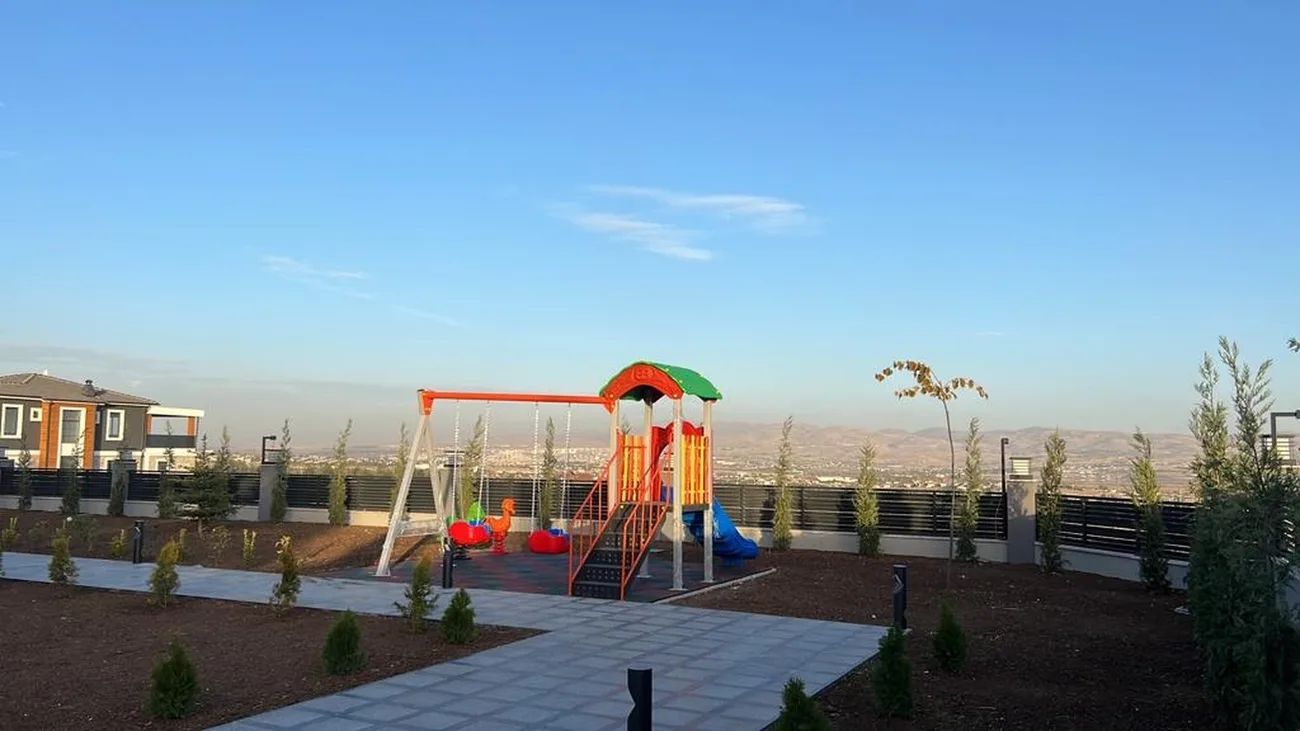
When planning a play set for a residential garden, school or park, people usually look at the design first. Yet the measurement that really decides the right choice is the safety area: the equipment itself plus the free space around it needed for children's falls, slides and swings.
Why the safety area matters
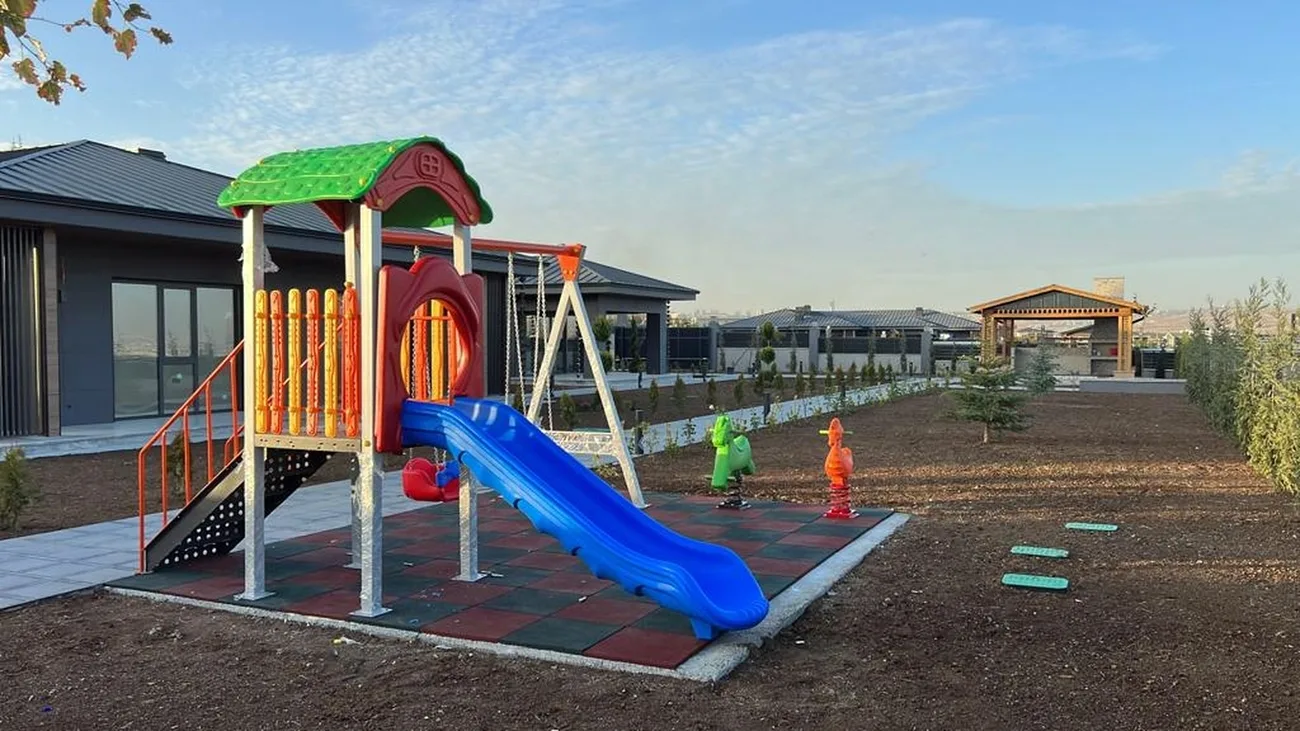
The end of a slide, the arc of a swing or the landing point of a child jumping from a climbing element all need space beyond the equipment's outline. This space must be free of trees, benches, walls or lamp posts, and the ground should be covered with impact-absorbing flooring.
Step by step
- Measure your site: measure the width and length in metres and mark paths, gates and trees.
- Check the model's safety area: each product page lists it in centimetres. Eko Elit 01, for example, needs 600 x 450 cm — about 27 m².
- Try both orientations: rotating a product by 90° often solves narrow sites.
- Leave a margin: add at least 50-100 cm of walking space for maintenance and supervision.
- Plan the extras: swings, spring riders, benches and bins have their own areas; a single spring rider needs 150 x 150 cm.
Example models
| Model | Safety area | Approx. area | Capacity |
|---|---|---|---|
| Eko Elit 01 | 600 x 450 cm | 27 m² | 0-5 children |
| KLS 04 | 1200 x 800 cm | 96 m² | 0-10 children |
| TR 05 Train Series | 1500 x 1100 cm | 165 m² | 0-25 children |
| GS 03 Ship Series | 1900 x 1350 cm | 256.5 m² | 0-60 children |
| RS 01 Swing | 400 x 400 cm | 16 m² | 0-2 children |
Common mistakes
- Counting only the equipment size and forgetting the safety area.
- Placing swings right next to a footpath.
- Pointing a slide exit towards a wall, fence or car park.
- Leaving the equipment on concrete or paving instead of impact-absorbing flooring.
The quick way: Area Planner
Enter your dimensions in the Area Planner and we will instantly list every play set, play element and fitness machine that fits, safety area included.